Best Vans for Van Life in 2026
Choosing the wrong van is the most expensive mistake in van life. You can fix a bad solar setup or swap out a heater. You can't easily undo a base vehicle that doesn't fit your build, your body, or your travel plans.
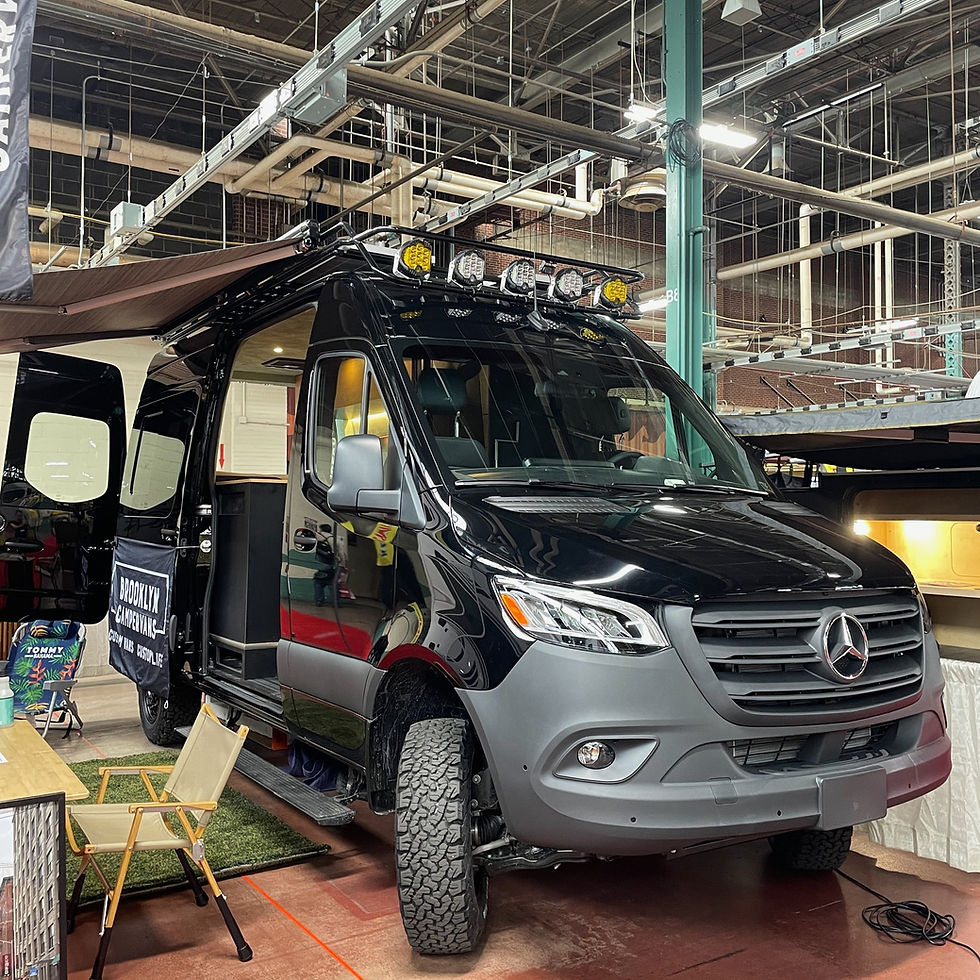
We've built 80+ custom vans at Brooklyn Camper Vans - almost exclusively on the Mercedes Sprinter platform - and we've seen clients come to us after struggling with other platforms. We're upfront that we're a Sprinter shop, but the reasons we chose that platform are the same reasons it tops this list.
Here's what actually matters when picking your base vehicle, and how every major option stacks up.

What Makes a Van Good for Van Life?
Before the rankings, here's what separates a van you'll love living in from one you'll regret:
Interior height. If you can't stand up inside, you'll feel the compromise every single day. The Sprinter High Roof gives roughly 6'3" of interior height after a typical build-out. The ProMaster gives about 6'1". The Transit High Roof lands around 6'3" as well, though the curved roof profile means less usable headroom across the full width.
Interior length. You need enough length for a bed, a kitchen, and a living area. The 170" wheelbase Sprinter gives you the room to build all three without choosing between them.
Payload capacity. A full van build adds 2,000-4,000 lbs. Your van needs to carry that weight legally and safely. Exceeding payload is both dangerous and voids your warranty.
Drivetrain. AWD vs. RWD vs. FWD matters for where you can go. AWD opens up winter driving, dirt roads, and access to the mountains.
Reliability and service network. Your van is your home. A breakdown isn't an inconvenience - it's a housing crisis. Service availability and parts supply matter more than most people think.
The Best Vans for Van Life, Ranked
1. Mercedes-Benz Sprinter 170WB High Roof AWD
Starting price: ~$68,000 new | $35,000-$55,000 used | Interior height: 6'3" Payload: 3,200-4,200 lbs (depending on configuration) | Drivetrain: AWD available (diesel only in 170WB AWD)
This is our build platform, and there's a reason. The Sprinter offers the best combination of interior volume, build quality, drivetrain options, and resale value of any van on the market.
The 170WB (170-inch wheelbase) High Roof AWD configuration provides enough room for a full kitchen, a wet bath with a real shower, a dedicated bedroom, and a living area. The 6'3" ceiling means most people can stand comfortably. The AWD system handles snow, sand, and dirt roads without the ground clearance sacrifice of a 4x4 lift.
The diesel engine (OM654, 2.0L 4-cylinder turbo) is more fuel-efficient and longer-lasting than the gas option. Expect highway fuel economy in the low 20s MPG, typically 22-23 MPG on completed BKC builds. Heavier loadouts with full water and gear will sit on the lower end. Mercedes also offers the Sprinter in a dually configuration (3500XD and 4500 models with dual rear wheels) for heavier builds that need more payload headroom.
The downsides: it's the most expensive base vehicle on this list, and Mercedes service typically runs 20-40% more per visit than Ford or Ram. But for full-time van life, the Sprinter's build quality, resale value, and interior dimensions justify the premium. A detailed comparison between the Sprinter, Transit, and ProMaster is in our dedicated breakdown.
Best for: Full-time van lifers, couples, and anyone who wants a premium build with maximum livable space.
2. Ford Transit High Roof 148WB / Extended 148WB
Starting price: ~$52,000 new | $22,000-$38,000 used | Interior height: ~6'3" (after typical build-out; raw cargo height is 81.5") Payload: 3,500-4,600 lbs | Drivetrain: AWD available
The Transit is the best value option for van life. It's cheaper to buy, cheaper to maintain, and Ford's service network is massive - you can get a Transit serviced at any Ford dealer in the country, which you cannot always do with a Sprinter.
The raw interior height of the High Roof is actually 81.5" - slightly taller than the Sprinter's 79.1" - but the Transit's more curved roof profile means less flat ceiling area at full height. After a typical build-out with insulation and flooring, expect roughly 6'3" of standing room at the center, tapering at the sides. AWD is available across most configurations.
Where the Transit falls short: build quality isn't as refined as the Sprinter. The body panels are thinner, the paint is softer, and the curved interior walls make build-out slightly more complex - you lose some usable width at shoulder height compared to the Sprinter's more rectangular profile. The gas engine (3.5L EcoBoost V6) is powerful but less fuel-efficient than the Sprinter's diesel - expect 14-17 MPG.
The Transit also depreciates faster than the Sprinter, which matters when you think about the resale value of your completed van build.
Best for: Budget-conscious van lifers who want a capable, full-size platform without the Sprinter price tag.
3. Ram ProMaster 3500 High Roof 159WB
Starting price: ~$44,000 new | $18,000-$30,000 used | Interior height: 6'1" (after typical build-out; raw cargo height is 77") | Payload: 4,000-4,700 lbs | Drivetrain: FWD only
The ProMaster is the most affordable full-size van for van life, and it has the highest payload capacity of the three. The flat floor (no wheel wells intruding into the living space) makes build-outs simpler and maximizes usable floor area.
The FWD layout is the trade-off. Front-wheel drive means no AWD option, which limits the ProMaster in snow, sand, and off-road situations. It also creates a different driving feel - the turning radius is tighter (great for cities), but the front end feels heavier in crosswinds.
The ProMaster runs on a 3.6L Pentastar V6 gas engine. It's reliable, and parts are cheap, but fuel economy is the worst of the three at 13-16 MPG. The Fiat-derived drivetrain also means some unique service considerations - not every mechanic is familiar with the platform.
Best for: Solo van lifers on a budget who primarily travel on paved roads and want maximum floor space.

4. Mercedes-Benz eSprinter (Electric)
Starting price: ~$62,000+ new (before incentives; a $20,000 customer cash rebate is currently available) | Interior height: 6'3" | Range: Up to 300 miles (EPA estimate; real-world range with a loaded build is closer to 200-250 miles depending on conditions)
The eSprinter is new territory. Same Sprinter platform, fully electric. We've built on this platform, and the driving experience is noticeably smoother and quieter than diesel.
The range is the honest constraint. Even at 300 miles on paper, a loaded van built in cold weather or hilly terrain will see significantly less. That works for weekenders and short-trip van lifers, but full-time cross-country travel with charging stops adds complexity. Charging infrastructure is improving fast, but it's not universal - especially in the remote areas where van lifers tend to go.
The upside: Dramatically lower fuel costs (charging typically runs $30-$80/month depending on usage and electricity rates), no engine maintenance, and the smoothest ride of any van on this list. If your van life involves regional travel or a home base, the eSprinter is worth considering.
Best for: Regional van lifers, weekenders, or anyone with a home base who doesn't need unlimited range.
5. Budget Platforms: Minivans and Cargo Vans
Price range: $3,000-$18,000 used | Examples: Dodge Grand Caravan, Honda Odyssey, Chevy Express, Ford E-Series
If you're testing the van life concept before committing to a full build, or you're working with a tight budget, smaller platforms get you on the road for a fraction of the cost.
The Dodge Grand Caravan is the most popular budget van life vehicle - the Stow 'n Go seats fold flat, creating a surprisingly usable sleeping platform. But you're sacrificing standing height, build space, and long-term livability.
Chevy Express and Ford E-Series cargo vans offer more interior volume than minivans and are mechanically simple. Parts are cheap and available everywhere. The trade-off is fuel economy (10-15 MPG), a rougher ride, and reduced interior height compared to the Sprinter/Transit/ProMaster class.
Best for: First-timers testing the lifestyle, solo budget travelers, weekend warriors.

Quick Comparison Table
Feature | Sprinter 170WB | Transit 148WB Ext | ProMaster 159WB | eSprinter |
Starting price (new) | ~$68,000 | ~$52,000 | ~$44,000 | ~$62,000+ |
Interior height | ~6'3" | ~6'3" | ~6'1" | ~6'3" |
Payload | 3,200-4,200 lbs | 3,500-4,600 lbs | 4,000-4,700 lbs | 2,800-3,500 lbs |
AWD available | Yes (diesel) | Yes | No (FWD only) | No |
Fuel economy | 22-23 MPG | 14-17 MPG | 13-16 MPG | Electric |
Service cost | Higher | Moderate | Lower | TBD |
Resale value | Best | Good | Moderate | TBD |
Best for | Full-timers | Value-seekers | Budget builds | Regional use |
How to Choose: The Decision Framework
Picking a van comes down to answering three questions:
1. How long are you planning to live in it?
Weekend use or seasonal trips: any platform works. Full-time, year-round: the Sprinter's interior dimensions, AWD, and build quality earn the premium. The van life cost difference between platforms narrows over time when you factor in resale, fuel, and maintenance.
2. Where are you going?
Paved roads and campgrounds: FWD ProMaster is fine. Mountain passes, BLM land, and winter travel: AWD is nearly mandatory. If winter van life is in your plans, the Sprinter AWD or Transit AWD is your option.
3. What's your budget, honestly?
A new Sprinter plus a full custom build runs $200,000-$270,000. A used Transit with a mid-tier build is $60,000-$100,000. A used minivan with a DIY setup is $10,000-$25,000. Be honest about your budget, and read our guide to financing a camper van if you're not buying outright.

What About Pre-Built Vans?
Winnebago Revel, Jayco Terrain, and Storyteller Overland are factory-built camper vans on the Sprinter platform. They offer a turnkey solution at a lower price than a full custom build.
The trade-off is customization. A factory van gives you one layout, one set of systems, and limited ability to modify. If the stock layout fits your life, that's great. If you want a layout designed around how you specifically work, sleep, cook, and travel, that's what custom conversion layouts are for.
Our detailed Winnebago Revel vs Jayco Terrain comparison covers how those two stack up against each other and against custom builds.
Key Takeaways
The Mercedes Sprinter 170WB High Roof AWD is the best all-around van for full-time van life - best interior dimensions, AWD, and resale value.
The Ford Transit offers the best value - cheaper to buy and maintain, with a massive service network.
The Ram ProMaster is the budget entry with the highest payload capacity, but FWD limits where you can go.
Interior height matters more than most people think - stand-up height changes daily livability.
AWD is worth the cost if you plan to travel in winter or access unpaved camping areas.
Your van choice should match your timeline, travel plans, and honest budget.
Frequently Asked Questions
What is the best van for full-time van life?
The Mercedes Sprinter 170WB High Roof AWD is the best platform for full-time van life. It offers the most interior height (~6'3" post-build with a flat, rectangular ceiling profile), AWD capability, the best resale value, and enough length for a complete living space with a kitchen, bathroom, bedroom, and work area. The higher purchase price is offset by lower depreciation and a build platform that supports premium conversions.
Is a Sprinter or a Transit better for van life?
The Sprinter is better for full-time, long-term van life - it has more interior height, better resale, and a diesel option that's more fuel-efficient. The Transit is better for budget-conscious builds - it's roughly $16,000 cheaper new, cheaper to service, and has a wider service network. For a detailed comparison, see our Transit vs Sprinter vs ProMaster breakdown.
How much does a van for van life cost?
A new Sprinter starts at around $68,000 (for the 170WB HR AWD diesel configuration), a new Transit at around $52,000, and a new ProMaster at around $44,000. Used options run from $18,000 to $55,000, depending on age, mileage, and platform. The van purchase typically accounts for 25-40% of the total van-life startup cost once you factor in the build.
Do you need AWD for van life?
Not strictly, but it significantly expands where you can go. AWD handles snow, sand, and unpaved roads that FWD and RWD vans can't manage safely. If you plan to free-camp on BLM (Bureau of Land Management) land, travel in winter, or access mountain trailheads, an AWD is worth the investment. If you're staying on paved roads and established campgrounds, you can save money with an FWD or RWD platform.
What van has the most interior space?
The Sprinter 170WB High Roof offers the best combination of length, width, and height for van life builds. The ProMaster 159WB has a wider interior and a flat floor (no wheel wells), but is slightly shorter. The Transit Extended 148WB matches the Sprinter in length and actually has a taller raw interior height (81.5" vs. 79.1"), but the Transit's curved roof provides less flat ceiling area. For layout-specific comparisons, see our conversion layout guide.
Is a van or RV better for full-time living?
Vans are more maneuverable, cheaper to fuel, easier to park, and can access places RVs can't reach. RVs offer more interior space and built-in amenities. For a complete comparison including costs, lifestyle, and practical trade-offs, read our van life vs RV guide.
Can you build a camper van on any van?
Technically, yes, but the platform dictates what's possible. A minivan supports a basic sleeping and cooking setup. A full-size Sprinter supports a complete home with a shower, a kitchen, climate control, and a dedicated workspace. Match the platform to your intended use - a $5,000 minivan build and a $200,000 Sprinter build serve very different lifestyles.
How long do van conversions last?
A well-built conversion on a quality platform can last 15-20+ years with proper maintenance. The build quality matters - proper insulation, quality electrical components, and sound plumbing last much longer than budget alternatives. The vehicle itself typically outlasts the conversion if maintained according to the manufacturer's schedule.
What should I look for in a used van for van life?
Rust (especially around wheel wells and undercarriage), service history, mileage under 100,000 for diesel Sprinters (under 80,000 for gas Transits), and any evidence of water damage or previous conversion work. Have a pre-purchase inspection done by a mechanic familiar with the platform. Budget $500-$1,000 for the inspection - it can save you $10,000+ in hidden problems.
Is the electric Sprinter good for van life?
The eSprinter works well for regional van life and weekenders. The range tops out at 300 miles on paper, but expect 200-250 miles in real-world use with a loaded build. Charging costs are significantly lower than diesel fuel. The limitation is long-distance travel - charging infrastructure isn't universal in remote areas. For full-time cross-country van life, the diesel Sprinter is still the more practical choice. Schedule a call if you want to discuss an eSprinter build - we've done them and can walk you through the trade-offs honestly.