Van Life in Winter: How to Stay Warm and Keep Moving
Winter separates van lifers who planned from those who didn't.
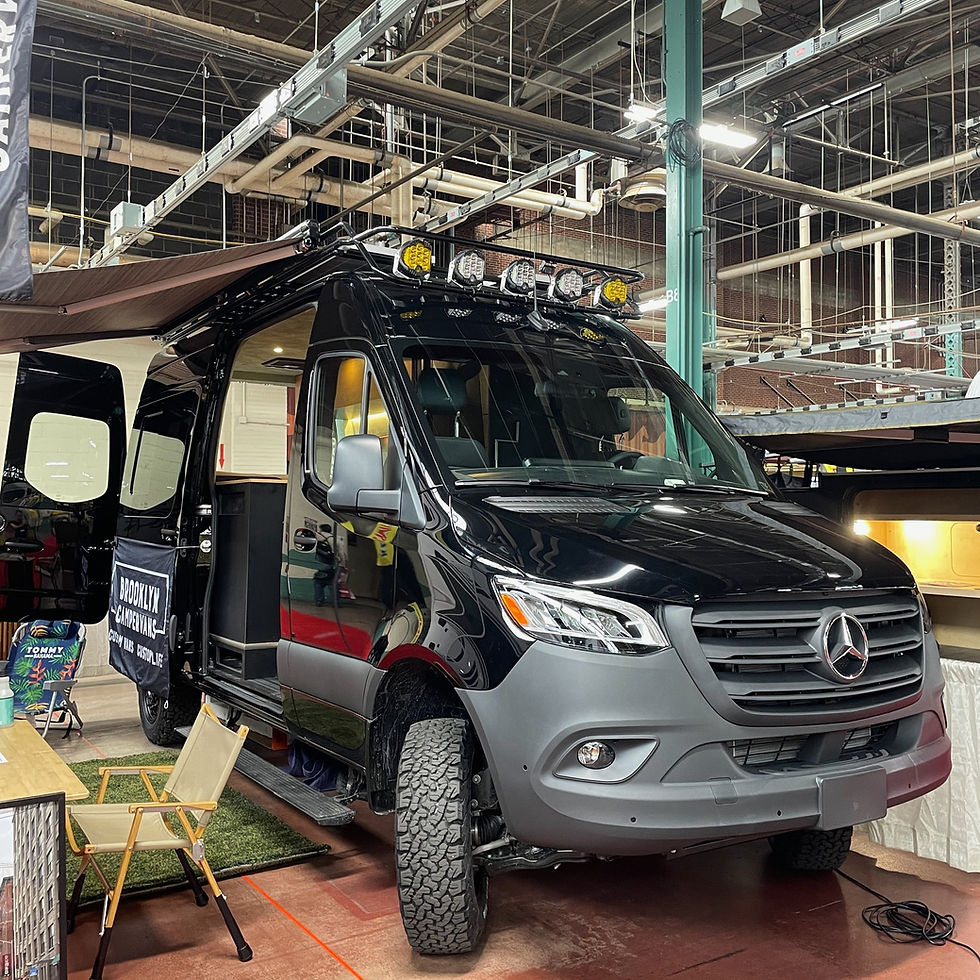
We've built 80+ vans at Brooklyn Camper Vans, and a growing number of our clients specifically request four-season builds. They want to ski in Colorado in January, work from a trailhead in Vermont in November, and not rearrange their entire life around the weather. That requires a van that's actually built for it.
Here's what winter van life demands - and where most people get it wrong.

Can You Really Do Van Life in Winter?
Yes, but your van has to be ready for it. The difference between a comfortable winter in your van and a miserable one comes down to three things: insulation, heating, and condensation management. Get all three right, and winter van life is not just survivable - it's one of the best seasons to be on the road: fewer crowds, cheaper campsites, better skiing.
Get even one of those three wrong, and you'll be sleeping in a damp, freezing box wishing you'd booked an Airbnb.

Insulation: The Foundation of Everything
Most budget van builds use rigid foam board (XPS or polyiso) and call it done. That's a problem. Rigid foam doesn't conform to the curves and cavities in a van body, leaving gaps where cold air sits and condensation forms.
We use rock wool insulation rated at R-15 (roughly 4 inches behind the walls) combined with sheep wool on walls and ceilings. Rock wool doesn't absorb moisture, doesn't support mold growth, and maintains its R-value even when damp. Sheep wool actively manages humidity - it absorbs moisture from the air and releases it when conditions dry out. Together, they create a thermal envelope that holds heat in and keeps condensation under control.
Compare that to a van with spray foam and no vapor barrier. In winter, you'll see water running down the interior walls within a week. That leads to mold, rust, and an interior that smells like a gym locker by March.
If you're comparing van conversion layouts, ask specifically about insulation materials and R-value. It's the single most important spec for winter performance.
Heating Systems That Work
A space heater from Home Depot is not a heating system. For full-time winter van life, you need a dedicated diesel-fired heater that runs independently of your engine.
Webasto EVO 40
This is what we install. The Webasto EVO 40 is a diesel-fired air heater rated for high altitude (up to 18,000 ft), which matters if you're in the Rockies or Sierras. It's the upgrade over the standard Air Top 2000 STC and what we recommend for any van that'll see real winter use. It runs on the same diesel as your van's fuel tank, draws minimal battery power, and heats a Sprinter interior with warm air flowing in 1-2 minutes.
The SmarTemp controller lets you set a target temp and forget it. The heater cycles on and off automatically. At night, most people set it to 62-65F and sleep comfortably in any conditions.
Installed cost: roughly $3,000-$3,500, depending on your configuration and labor market. That's the most important figure in your entire build if you plan to travel between October and April.
For a full rundown of every heating option, our camper van heating guide covers diesel, propane, and electric heaters and explains why we chose the systems we did.
What About Propane Heaters?
Propane heaters work but come with trade-offs. They produce moisture as a byproduct of combustion, which makes condensation worse - the exact opposite of what you want in winter. They also require ventilation (cracking a window in freezing weather) and carry a carbon monoxide risk that makes most van lifers uneasy sleeping with one running. Diesel heaters vent externally and produce zero moisture inside the van.

Condensation Management
This is the hidden winter van life problem nobody talks about until they're dealing with it. Two people sleeping in a van produce roughly half a liter of moisture per night just from breathing. Add in perspiration, cooking, boiling water, and wet gear, and total moisture output can easily reach a liter or more.
Without proper management, that moisture condenses on cold surfaces - windows, walls, metal framing - and causes mold, corrosion, and a perpetually damp interior.
How to manage it:
Ventilation is non-negotiable. Your MaxxAir or Fantastic Fan needs to run on low exhaust even in freezing weather. It feels counterintuitive to vent warm air, but the moisture it removes is worth the small heat loss. A properly insulated van compensates.
Insulated window coverings. Every window should have a full blackout, insulated cover. Windows are the biggest thermal weak point in any van. Our builds include custom-fit insulated coverings for every window.
Cook with the fan on. Boiling water is the fastest way to dump moisture into your van interior. Always run the exhaust fan while cooking.
Crack the Webasto thermostat up slightly before bed. Warm air holds more moisture. If the indoor temperature drops too low at night, the moisture in the air reaches the dew point and condenses on surfaces.
Battery and Solar in Winter
Your electrical system works harder in winter. Shorter days mean less solar production. Colder temperatures reduce battery efficiency. And your heating system draws power even though most of the heat comes from diesel.
A properly sized solar setup matters more in winter than any other season. We install up to 595W of walkable solar panels on an Unaka roof rack - but even with that, winter solar production in northern latitudes can drop to 40-50% of summer levels.
That's why battery capacity matters. Our 3.6-15 kWh EcoFlow battery systems give you a buffer for cloudy days and short daylight hours. If you're running a Webasto heater, Starlink, and a fridge, you'll want at least 5 kWh for a comfortable two-day buffer without sun. The EcoFlow Smart Generator is a good backup - it auto-senses when the battery drops below 20% and charges to 90%.
For overall van life costs, winter increases your monthly spend by $100-$300, depending on diesel consumption and how often you need to move to find sun.

Winter Driving and Route Planning
Tires and Traction
If you're driving a Sprinter in winter, you need proper tires. All-season tires are not winter tires. For snow and ice, dedicated winter tires make a measurable difference in stopping distance and traction. All-terrain options like the BFGoodrich KO2 handle dirt and gravel well, but they lack the siping and rubber compound that true winter tires use to grip in cold, icy conditions. If your route includes mountain passes or regular below-freezing driving, invest in a set of dedicated winter tires.
AWD helps but doesn't replace tires. The Sprinter 170WB AWD handles light snow well, but on ice or packed snow, the tires do 90% of the work.
Chains and Regulations
Many mountain passes require chains. Carry a set that fits your van. In states like California, Colorado, and Oregon, chain requirements are enforced at checkpoints, and the fines for running without them aren't worth the risk.
Route Strategy
The smartest winter van lifers follow the weather, not fight it. Common strategies:
Snowbird south: Follow the I-10 corridor from Texas through New Mexico, Arizona, and Southern California. Quartzsite, AZ, becomes a van life hub from November through February.
Ski bum loop: Colorado, Utah, Montana. Park near resorts, ski during the day, and work remotely in the evenings. This requires a four-season build.
Desert winter: Joshua Tree, Sedona, Big Bend. Daytime temps in the 50s-60s, nighttime drops to the 30s. Comfortable with a diesel heater and proper insulation.
If you're still deciding whether van life is the right move, our overview of van life pros and cons covers the full picture - including seasonality.
Water System Winterization
Frozen pipes will ruin your week. If temperatures drop below freezing overnight (and they will), your water system needs protection.
Tank heating pads. We install electric heating pads on the 40-gallon fresh water tank that keep the water above freezing in sub-30F conditions.
Insulated plumbing runs. All plumbing lines should be insulated and routed through heated interior space, not along the van's exterior walls or floor.
Drain option. If you're parking for an extended period in deep cold, you need the ability to drain the entire system. An electronic dump valve on the gray water tank makes this simple.
Antifreeze flush. For long-term winter storage, run RV-safe antifreeze through the system.
If your van has a proper shower system, make sure the shower plumbing is equally protected. Shower lines that run along exterior walls are the most common freeze point in winter builds.
What to Pack for Winter Van Life
Beyond the standard van life essentials, winter adds a few non-negotiables:
Quality sleeping bag rated to 20F or lower (even with a heater, a backup plan matters)
Merino wool base layers (regulate temperature better than synthetics in a van environment)
Collapsible snow shovel
Ice scraper and de-icer spray
Extra fuel jerry can (diesel stations can be sparse in remote winter areas)
Moisture-absorbing products (DampRid or similar) as a supplemental humidity control
A doormat and boot tray - wet boots and snow tracked into a small space add up fast.
Winter Van Life Costs
Winter van life runs slightly higher than other seasons. Here's what changes:
Expense | Summer | Winter | Why |
Fuel | $200-$400 | $300-$600 | Diesel heater consumption + potential for more driving to stay warm |
Campsite fees | $0-$300 | $0-$500 | Some free camping spots close seasonally; RV parks with hookups become more attractive |
Gear/clothing | - | $200-$500 one-time | Proper winter layers, sleeping bag upgrade |
Propane (if applicable) | $20 | $60-$100 | Higher cooking use + supplemental heating |
For the full monthly cost breakdown, factor in an additional $100- $300/month during the winter months.

Key Takeaways
Winter van life is comfortable with the right insulation (R-15+ rock wool and sheep wool), a diesel heater (Webasto EVO 40), and active condensation management.
Condensation is the biggest winter problem - run your fan on exhaust, use insulated window coverings, and keep the interior warm.
Solar production drops 40-50% of summer levels in winter, and a 5+ kWh battery system provides the buffer you need.
Winterize your water system with tank heating pads, insulated plumbing, and a drain option.
Winter van life costs run $100-$300/month higher than in summer, mostly due to diesel and campsite fees.
Follow the weather: snowbird south for warmth, or commit to a four-season build for mountain winters.
Frequently Asked Questions
Is van life in winter safe?
With proper preparation, yes. The main risks are carbon monoxide (use a diesel heater that vents externally, not a propane heater inside), frozen water systems, and winter driving conditions. A CO detector, winterized plumbing, and proper tires address all three. The bigger risk is being unprepared - a van with poor insulation and no heater in 15F weather is a genuine safety issue.
How do you heat a van in winter?
The standard is a diesel-fired air heater, such as the Webasto EVO 40. It runs on your van's diesel fuel, vents combustion gases outside, and heats the interior without producing moisture. It draws minimal battery power and can run all night on a thermostat. Propane heaters work but add moisture to the interior and require ventilation.
How cold is too cold for van life?
With a properly insulated and heated van, there's no hard limit. Our clients camp comfortably in single-digit temperatures. The Webasto heater is rated for extreme cold use. The limiting factor is usually the driver's comfort with winter road conditions, not the van's ability to stay warm.
Does solar work in winter?
Yes, but at reduced capacity. Expect 40-50% of your summer solar production in northern latitudes during December and January. A larger battery bank (5+ kWh) and a backup charging method (generator or alternator charging) compensate for the shorter days.
How do you prevent pipes from freezing in a van?
Insulate all plumbing lines, route them through a heated interior space, and install a heating pad on your freshwater tank. If you're parking in sustained sub-freezing temperatures, keep the interior above 40F overnight. For long-term storage, drain the system and flush with RV-safe antifreeze.
What's the best place for winter van life?
The Southwest U.S. is the most popular choice - Arizona, New Mexico, and Southern California offer mild winters, abundant free camping on BLM land, and large van life communities. Quartzsite, AZ, is a winter hub. For those who want snow, Colorado and Utah offer ski access and robust van-life infrastructure.
How much does winter van life cost per month?
Budget $1,400-$3,300/month - roughly $100-$300 more than summer. The increase comes from higher diesel consumption (for heating and driving), seasonal changes in campsite rates, and initial purchases of winter gear. Once you have the gear, the ongoing premium is mostly fuel.
Do you need AWD for winter van life?
AWD helps in light snow and muddy conditions, but isn't strictly required if you're staying on paved roads and carrying chains. If you're planning to camp at ski areas, on forest roads, or anywhere that isn't plowed regularly, AWD is worth the investment. The Sprinter 170WB AWD is our standard recommendation for four-season van life.
How do you deal with condensation in a van?
Run your exhaust fan on low continuously (even while sleeping), use insulated window coverings, cook with the exhaust on, and keep the interior temperature consistent. Sheep wool insulation helps by absorbing and releasing moisture. The biggest mistake is sealing up the van completely to retain heat - that traps all the moisture inside.
Can you work remotely from a van in winter?
Absolutely. With Starlink for van life and a properly heated van, winter is one of the most productive times for remote work. Fewer outdoor distractions, more indoor work hours, and Starlink performs well in cold weather. Our remote work setup guide covers the full workspace configuration.
Is it worth building a four-season van?
Suppose you plan to travel year-round or spend any time above 5,000 ft elevation in cooler months, yes. The cost of proper insulation, a Webasto heater, and winterized plumbing adds $8,000-$15,000 to a build - but it extends your travel season by 4-5 months and opens up locations that fair-weather vans can't reach. For most full-timers, that extended flexibility more than justifies the upfront cost. Schedule a free call, and we'll walk through whether a four-season build makes sense for your plans.