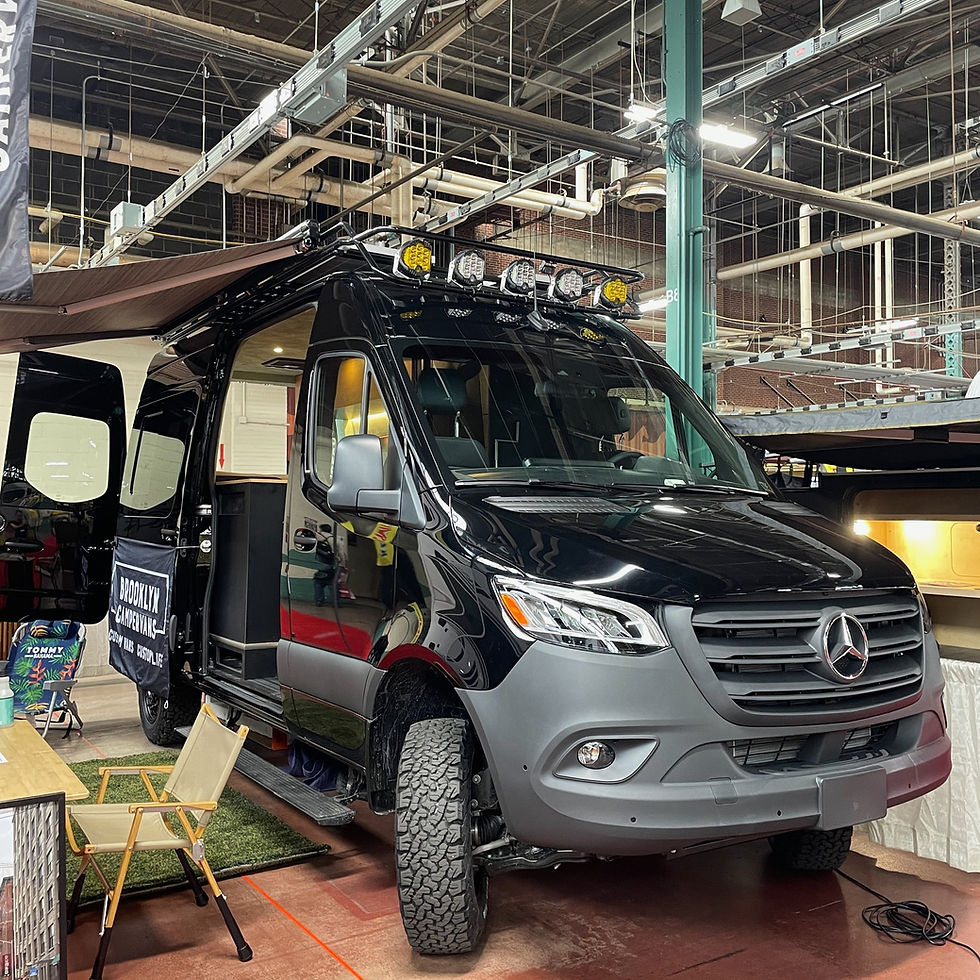
Van Life with a Partner: What Nobody Tells You
Living in 60-70 square feet with another person sounds romantic until you're three weeks in and one of you needs space that doesn't exist.
Van life with a partner is one of the best or worst things you'll do together. The difference comes down to three things: how the van is built, how you manage routines, and whether you talked about the hard stuff before you left.
We've built vans for dozens of couples at Brooklyn Camper Vans. The couples who thrive in van life aren't the ones who agree on everything - they're the ones who designed their van and their routine around the reality of shared small-space living.

The Layout Matters More Than You Think
Most van layouts are designed for one person and tolerate two. A van designed for two people from the start is a different animal.
Bed Size and Configuration
A queen-size bed (60" x 80") is the minimum for two adults. Anything smaller - full-size or worse, a narrow platform bed - means one person is sleeping against the wall, and the other is falling off the edge. Sleep quality drives everything else.
Our builds use a RoamRest custom mattress (5" trifold, 4-layer gel memory foam) in queen or larger configurations, depending on the layout. The Elevate Van layout features a Happijac elevator bed that raises to the ceiling during the day, leaving a full living room underneath. This solves the biggest problem for couples in van life: the bed takes up the entire van during the day, leaving you nowhere to sit, work, or exist.
For layout options designed around two people, our Sprinter conversion layouts show how we configure the space.
Two Work Zones
If both partners work remotely, you need two functional work positions. One person at the dinette table and the other propped up on the bed doesn't scale past the first week.
Options that work:
Swivel cab seats facing the living area create a second work position. Our Scheel-Mann Vario F seats swivel 180 degrees and face backward, giving you a seated work position at the front of the van with a fold-out table.
Dinette/table area as the primary workspace. A solid surface at the right height, with outlets and lighting designed for work.
Outside work setup. In good weather, a camp table under the awning doubles your workspace. The Fiamma F45 awning deploys in under a minute.
The key: both positions need power outlets, lighting, and internet access. Our builds include USB and 12V outlets at every seating position. Starlink provides internet anywhere. The remote work setup matters more when two people need it simultaneously.

Bathroom and Shower Design
Sharing a van bathroom is one of the topics couples dance around during consultations. Here's the practical version:
A proper wet bath with a real shower, a Nebia showerhead, and a Nautilus door means both people shower daily without depending on gyms or campgrounds. The 40-gallon fresh water tank supports two daily showers for 3-4 days with water-conscious habits (short showers, low-flow head), leaving enough for cooking and drinking.
The toilet situation matters more than people admit. Our clients choose between the Wrappon Sunny (Japanese heat-seal, 12V, per-use disposal) and the Laveo Dry Flush (vacuum seal, full-size seat). Both provide a private, odor-free bathroom experience. The alternative - holding it, finding public restrooms, or using a basic bucket toilet - wears thin fast when you're sharing the space with someone else.
Storage for Two
Two people's gear in one van means every cubic inch of storage matters. The top storage mistakes couples make:
Not enough clothing storage. You each need a dedicated space - a shared bin doesn't work past week two.
No dedicated space for personal items. Each person needs a "their stuff" zone that the other doesn't touch.
Insufficient kitchen storage for cooking for two. More food, more cookware, more container space.
Our builds include custom cabinetry with electromagnetic latches (auto-lock while driving, soft-close), dedicated storage zones per person, and overhead cabinets that use every available space above the living area.
The Money Conversation
Van life with a partner changes the financial math. Some costs split. Some double. Some stay the same.
What Splits (or Stays the Same)
Fuel: same cost whether one or two people
Campsite fees: same
Van payment: same
Van insurance: same (though adding a second driver may adjust the rate slightly)
Internet: same - one Starlink connection serves both
What Increases
Food: 50-80% more. Two people eat more, even cooking in-van. Budget $400-$800/month for a couple vs. $250-$500 solo.
Health insurance: doubles. Two ACA plans cost $400-$1,000/month, depending on age and state.
Water consumption: doubles. Showers, cooking, drinking. Your 40-gallon tank runs out in 3-4 days instead of 7-8.
Recreation: increases. Two park passes, two activity fees, two everything.
Gym membership (if no built-in shower): doubles. Two Planet Fitness memberships = $50/month.
Couples Budget Estimate
Expense | Solo | Couple | Difference |
Fuel | $300 | $300 | $0 |
Food | $400 | $700 | +$300 |
Campsites | $100 | $100 | $0 |
Van insurance | $150 | $160 | +$10 |
Health insurance | $300 | $600 | +$300 |
Internet | $150 | $150 | $0 |
Maintenance | $100 | $100 | $0 |
Gym | $25 | $50 | +$25 |
Recreation | $200 | $350 | +$150 |
Subscriptions | $40 | $40 | $0 |
Total | $1,765 | $2,550 | +$785 |
Couples' van life costs roughly 40-50% more than solo van life, not double. For the full expense breakdown, see our monthly cost guide and the broader van life cost overview.

Making It Work: Routines and Boundaries
Personal Space Protocol
You need a system for when one person needs to be alone. In a van, "alone" doesn't mean different rooms. It means one person inside and one outside, or one person at a coffee shop while the other works in the van.
Couples who make van life work long-term:
Have a signal or phrase for "I need space right now" that doesn't require explanation or justification
Alternate who gets the van for focused work time
Each has a personal activity they do alone - a run, a hike, a coffee shop session
Morning and Evening Routines
Two people using one bathroom, one kitchen, and one living area need staggered or coordinated routines. The couples who figure this out quickly are the ones who stay happy.
Common approach: one person wakes first, makes coffee, and has 30-60 minutes of quiet time before the other gets up. Evening routine: one person showers while the other does dishes. It sounds rigid, but rhythm removes friction.
Decision Fatigue
Van life involves constant micro-decisions. Where to park. When to move. What to eat. Where to get water. Which route to take. Solo, you make these decisions without discussion. With a partner, every decision is a negotiation.
The solution most successful couples use: alternate who the "decision maker" is for the day or the drive. One person navigates, picks the campsite, and decides the route. The other person goes along and makes decisions the next day.
Conflict in 60 Square Feet
You'll argue. The question is whether you argue productively or whether disagreements escalate because there's no space to cool down.
Ground rules that work:
If a disagreement is heating up, one person takes a walk. Not to "win" by leaving, but because physical space creates emotional space.
No discussing stressful topics while driving in bad weather, heavy traffic, or when either person is hungry or tired.
Regular check-ins (such as weekly) about how the lifestyle is going. Not just logistics - how you're each feeling about it.
Van Life with a Partner and Pets
Many of our clients are couples with dogs. A dog in a couple's van adds a third presence to the space equation.
Design considerations for couple + dog:
Faux leather upholstery for easy cleaning (we use this in pet-friendly builds)
A pet pass-through between the cab and the living area so the dog can move freely
Outdoor shower for paw rinsing (separate from the indoor shower)
Remote temperature monitoring via the Waggle pet monitor - critical for leaving the dog in the van while you step out for a meal or errand
Storage for pet gear - food, bowls, leash, bed, toys. Dogs take up more space than people expect.
The couple-and-dog combination works well in a Sprinter 170WB. The 170" wheelbase provides enough length for a couple's living area plus a dog-friendly zone. Smaller vans make the three-body arrangement tight.

Should You Try Van Life Together?
Before you commit to a build, run a test. Rent a camper van for 2-3 weeks. Not a weekend - that's a vacation, not a lifestyle test. Two to three weeks reveal the daily friction points, sleep-quality issues, and personal-space needs that a weekend hides.
What the test run should include:
At least 3-4 consecutive days of both people working remotely from the van
Cooking all meals in the van for a full week
At least one stretch of free camping (no hookups, no campground amenities)
At least one real disagreement and how you resolve it in the space
An honest conversation at the end about what worked, what didn't, and what you'd need in a custom build
If the test run confirms that the lifestyle works for both of you, the custom-build conversation becomes much more productive. You'll know exactly what layout, systems, and features your partnership needs - not what looks good on Instagram. Our getting started guide covers the full preparation process.
Choosing the Right Van for Two People
The best van for couples is one with enough interior length and height for a queen bed, a full kitchen, a bathroom, and two functional seating/work positions. That means:
Sprinter 170WB High Roof: The best option. Enough length for all zones, plus a comfortable bedroom.
Transit 148WB Extended High Roof: Workable but tighter. The shorter interior requires more compromises in layout.
ProMaster 159WB High Roof: The widest interior offers layout flexibility, but FWD limits where you can go together.
If you're comparing van options to RVs for a couple living in them, our van life vs. RV guide covers the space and lifestyle trade-offs.
Key Takeaways
A van designed for two people from the start is fundamentally different from one designed for one.
Two remote-work positions, a real bathroom, and a queen bed are non-negotiable for couples.
Couples' van life costs ~40-50% more than solo - mostly from food and doubled health insurance.
Personal space systems (a signal for needing alone time, alternating decision-making) prevent small annoyances from becoming real conflict.
A 2-3 week rental test run reveals more about a couple's compatibility in a van than any amount of planning.
The Sprinter 170WB is the best couples platform - enough space for separate zones without compromising livability.
Frequently Asked Questions
Is van life good for couples?
It can be one of the best experiences a couple shares - or the fastest way to expose incompatibilities. Couples who succeed in van life have strong communication, agreed-upon routines for shared space, and a van designed for two people. A test run before committing is essential.
How much does van life cost for a couple?
Budget $1,800-$3,200/month with a paid-off van. The increase over solo van life (~$1,200-$2,000/month) comes mainly from doubled food costs, two health insurance plans, and slightly higher recreation spending. The monthly cost breakdown covers every line item.
What size van do you need for two people?
A Sprinter 170WB High Roof or equivalent is the recommended minimum for a full-time couple living. It provides enough length for a queen bed, kitchen, bathroom, and two work/seating positions. Smaller vans work for weekends but create daily friction in full-time use.
How do couples handle privacy in a van?
Staggered routines (one person's morning quiet time while the other sleeps), alternating solo activities (coffee shop, hike, run), and a no-pressure signal system for when someone needs alone time. Some couples add a partition curtain between the cab and the living area for visual separation.
Can two people work remotely from a van?
Yes, if the van has two functional work positions with power and internet. A swiveling cab seat with a fold-out table, plus a dinette area, gives both people a dedicated workspace. Starlink provides enough bandwidth for two simultaneous video calls. In good weather, an outdoor setup under the awning creates a third work position.
How do you handle disagreements in a van?
Ground rules: one person takes a walk to create physical space during heated moments, no stressful discussions when either person is hungry/tired/stressed, and weekly check-ins about how the lifestyle is going. The biggest predictor of success isn't avoiding conflict - it's having a system for resolving it in small spaces.
What's the best bed setup for couples in a van?
A queen bed (60" x 80" minimum) with a quality mattress. The RoamRest custom mattress in our builds is a 5" trifold gel memory foam designed for van dimensions. The Happijac elevator bed in our Elevate Van layout lifts to the ceiling during the day, giving you full living space underneath - solving the biggest couples' complaint that the bed consumes the van all day.
Should we do a trial run before building a van?
Yes - 2-3 weeks minimum. A weekend trip is a vacation; three weeks is a lifestyle test. Include remote work days, all in-van cooking, free camping, and at least one real disagreement. What you learn about your shared space needs directly informs what to build.
How do couples split van life costs?
Most couples we work with use a joint account for shared expenses (fuel, campsites, food, van payment, insurance) and maintain personal accounts for individual spending. The shared expenses are split 50/50 or proportional to income. The key is agreeing on the system before you leave - money discussions are harder in a parking lot than at a kitchen table.
Is a van or RV better for couples?
A van is better if you prioritize mobility, lower operating costs, and access to remote camping. An RV is better if you prioritize interior space, stay at campgrounds for weeks at a time, and want residential-level amenities. A well-designed van better serves most couples who value active travel and want to move frequently. Schedule a call, and we'll walk through the options based on how you both plan to use the space.